

Trash Talking Pt. 1
Conifer works on a lot of sites that have been established homes for decades, which means for our coastal crew, we find a whole lot of buried treasure. Or at least that’s what it feels like when a shovel full of dirt comes up with an old Tonka truck or cracked blue glass.
Important Distinction: There are many sites in Oregon where disturbing indigenous artifacts is a serious concern, and we want to be clear, these artifacts are sacred and important, and should be reported immediately. This article does not discuss the process and procedure for what is call “inadvertent discovery” or indigenous artifacts.
Our trash talk today is about contemporary trash. Specifically, what it means to manage it well, what we keep finding on our sites, and why we treat daily cleanup as a non-negotiable part of how Conifer builds.
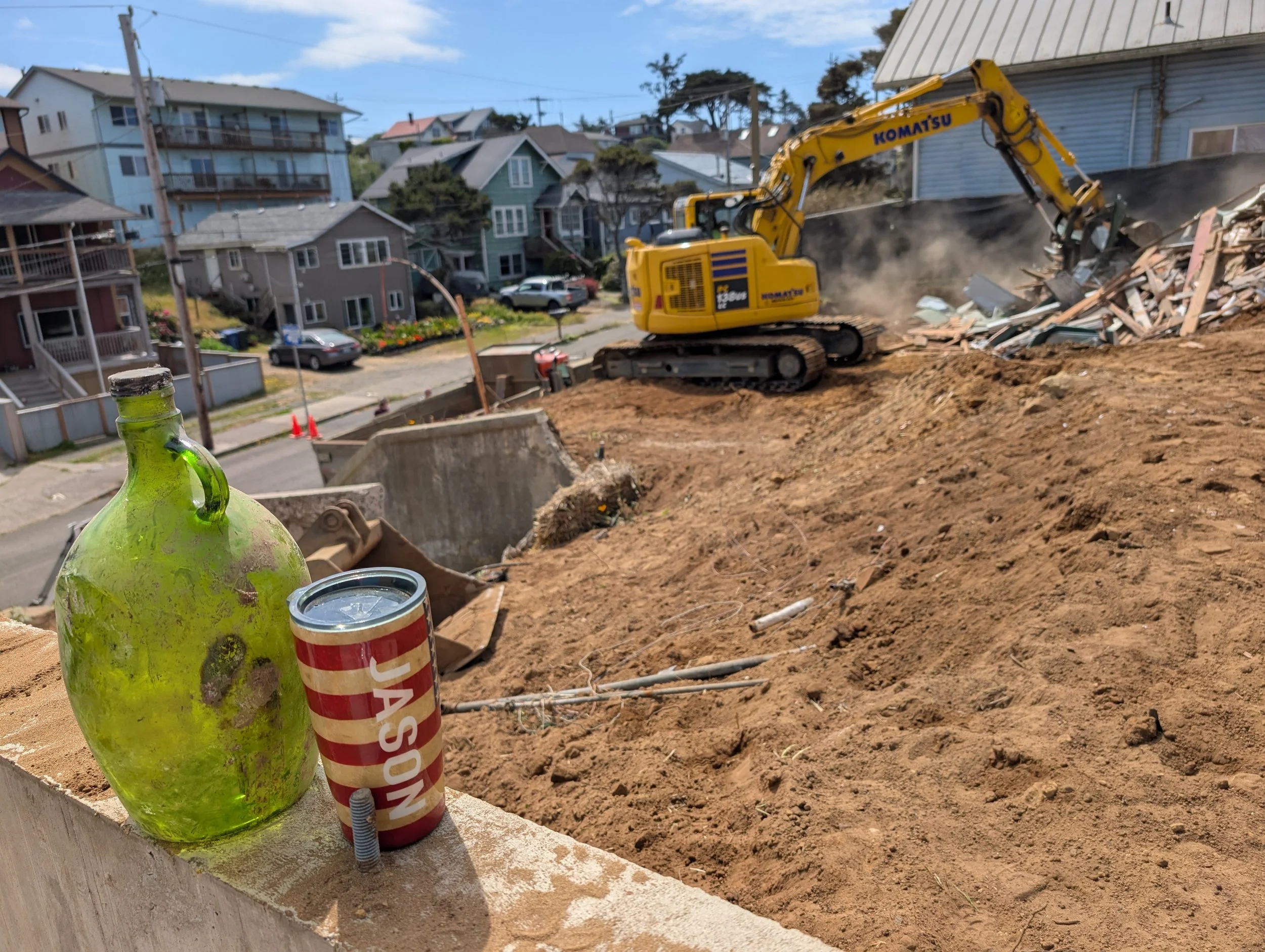
A vintage green glass jug next to a modern day coffee Thermos. Maybe Jason’s great-grandpa?
Why a clean site matters
A messy job site isn't just an eyesore. Loose nails, scattered debris, and forgotten scraps are a real hazard for the people working there every day. A dropped nail can end up in a boot. A stray piece of strapping can end up in a tire. The plastic wrap so much of our material comes in can get whisked up by the wind and land in the ocean. Multiply that across months of work and dozens of trips in and out of a site, and the cost of letting trash pile up adds up fast, in both safety and dollars.
There's also a longer timeline to think about. Construction debris doesn't just disappear when a project wraps up. Plastic, treated wood, and metal scraps left behind can sit in soil for decades, long after anyone remembers how they got there. We've found proof of that firsthand.
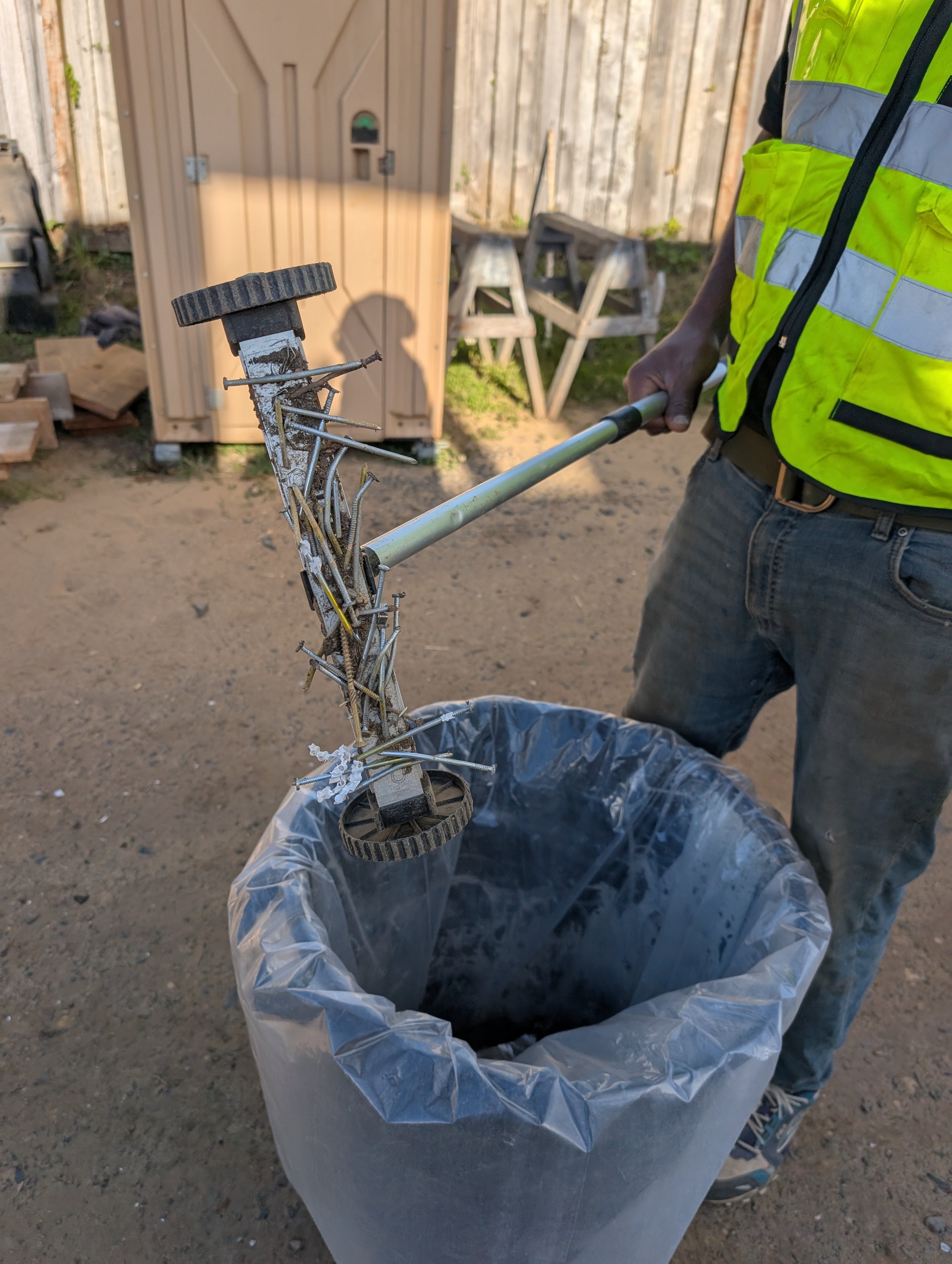
Screw It.
If stepping on a Lego is its own form of torture, what might we call this?
Ouch!
We build houses that will be home to gardeners, sunbathers, and families with kiddos running around.
Conifer Construction understands that “our site” becomes “your home.” So we put in a lot of good work to make sure our residents future feet are as safe as possible!
What's been turning up on site
New construction has a way of digging into history, literally. On our current site, we've pulled up vintage glass bottles, ceramic ware that looks straight out of the 1950s, and, our personal favorite, a Comet bleach bottle old enough to remember the fall of the Berlin Wall.
It's a good reminder that every site has a past, and that whatever gets left behind has a way of sticking around far longer than anyone intends. Which is exactly why we take our own waste seriously.
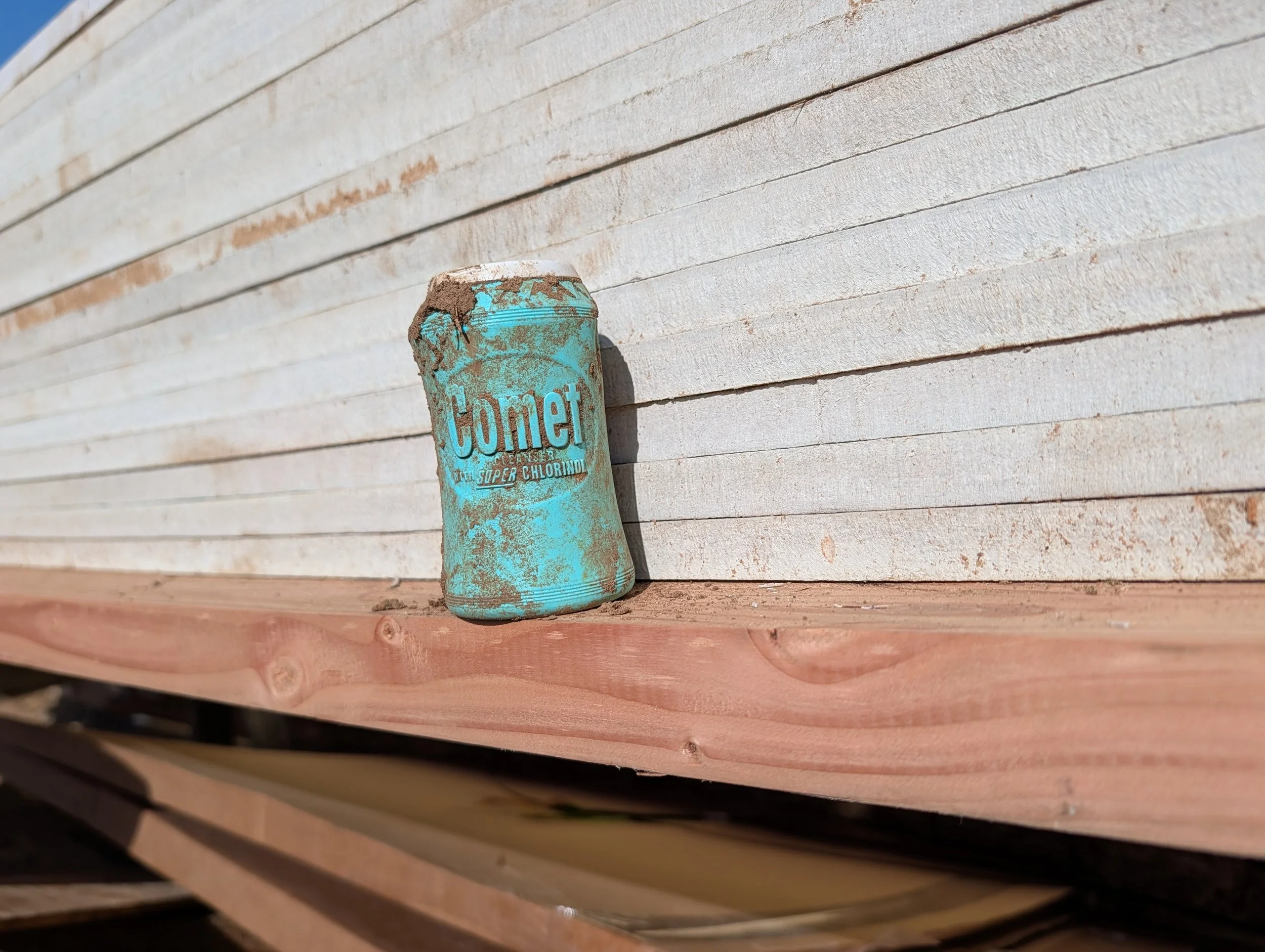
A vintage Comet Cleaner bottle found mid-way through our build.
How we handle ours
At Conifer, we don't leave that question to chance. Our crews walk the site and hand-pick nails, screws, and material scraps daily. It's not glamorous work, but it means we always know where our waste is going, and that nothing gets left behind to become someone else's mystery bottle forty years from now.
It's a small habit with a big payoff: safer job sites, happier truck tires, and a site we can hand off clean.
That said, daily pickup is just one piece of a much bigger picture. Construction generates an enormous amount of waste industry-wide, and where that waste ends up has real environmental consequences. We'll dig into that in Part 2.
