

What the deck!
Coastal Decks: How to Keep Your Outdoor Space in Good Shape
Living on the Oregon coast means trading a lot for that view. Salt air, wind, and the occasional sideways rainstorm are part of the deal, and your deck feels every bit of it. The good news is that with a little regular attention, a coastal deck can stay beautiful and solid for years.
Here's what we recommend.
Start with a good look around
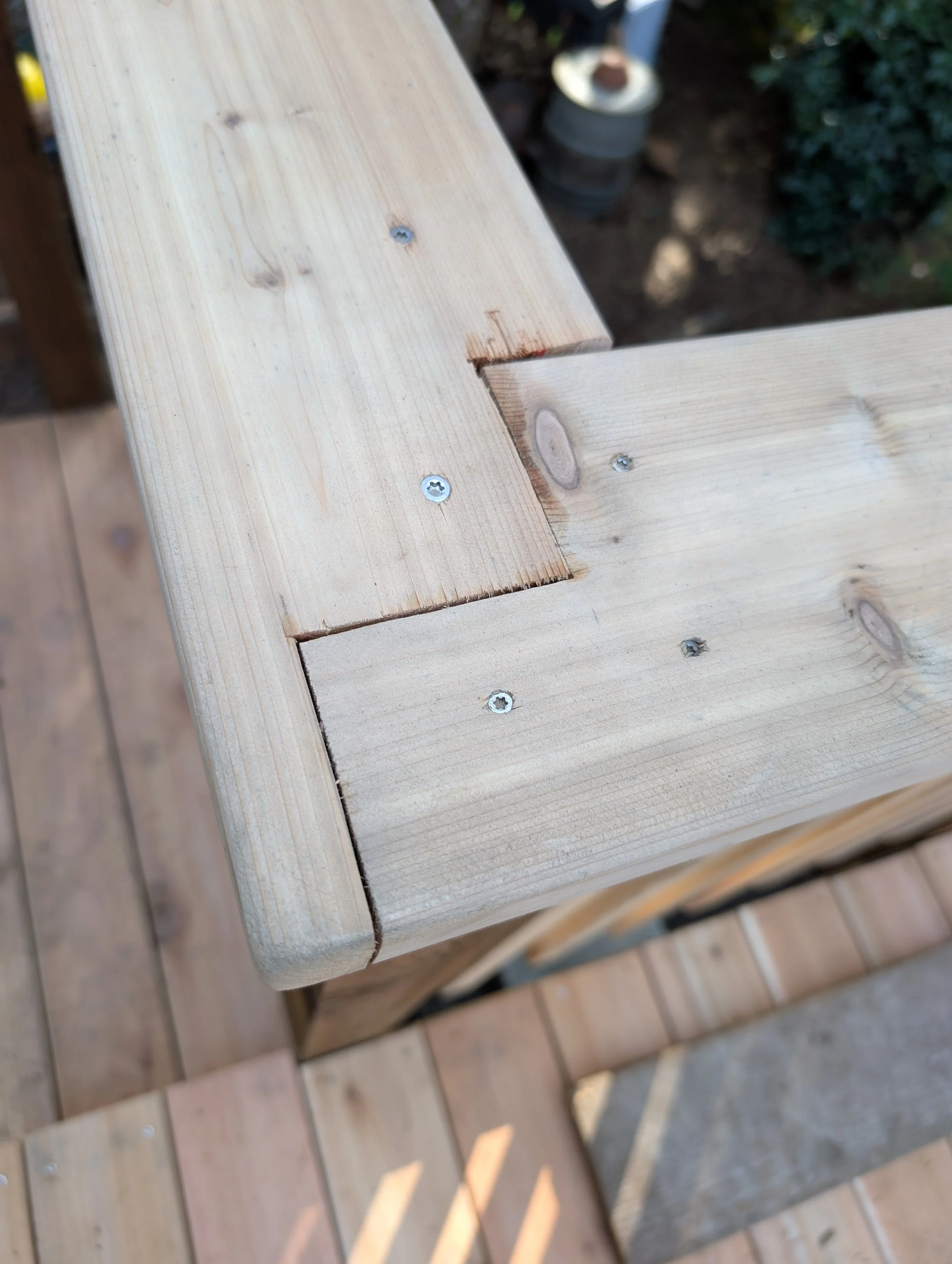
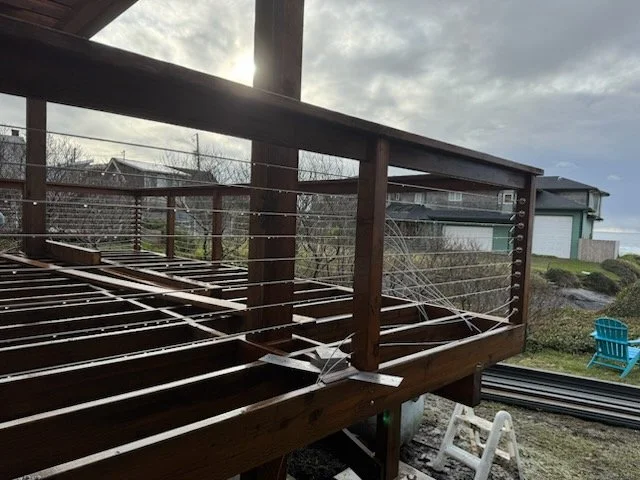
Before anything else, walk your deck and look at it honestly. Check for loose or missing fasteners, soft spots in the wood that might signal rot, and any metal hardware that's starting to rust or corrode. Coastal air accelerates all of these. Catching them early is almost always easier and cheaper than waiting.
Clean it regularly, and gently
Salt and sand are abrasive, and they build up fast near the water. A simple routine goes a long way: sweep off debris, then rinse with a garden hose to open up the wood grain and carry away grit. For a cleaning solution, you don't need anything harsh. A cup of baking soda in a gallon of water, or a 1:1 mix of water and white vinegar, works well. Apply it, let it sit for ten minutes, scrub with a stiff brush, and rinse clean.
Skip the pressure washer. It's tempting, but the force can damage wood fibers and shorten the life of your deck.
Sand out the wear
After cleaning, take a pass with 80-grit sandpaper on a pole sander to smooth out any nicks and scratches. Don't forget to work between the boards too, clearing out any residue that's collected in the gaps.
Seal it well
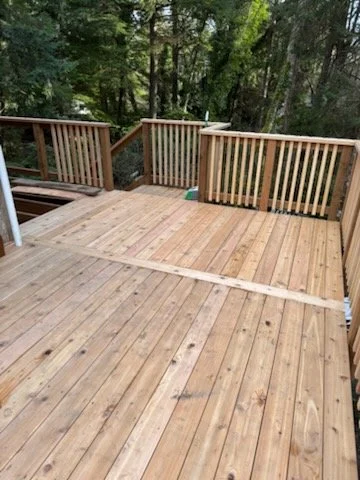
Sealing is the most important step for a coastal deck. Moisture and salt will find any opening, and a good sealer is your primary defense. Apply a clear sealer with a paint roller and plan for at least two to three coats. If you're looking for an environmentally friendlier option, mustard seed wax is worth considering.
To check whether your existing seal is still doing its job, pour a glass of water on the surface. If it beads up, you're in good shape. If it soaks in, it's time to reseal.
Keep up with it
A deck in a coastal environment rewards consistent attention more than occasional heroics. Plan to inspect and clean after major storms, and do a full assessment at least once a year. If you're dealing with significant rot or structural damage, bring in a professional rather than patching over a problem that's likely to grow.
The coast asks a little more of your outdoor spaces. But a well-maintained deck is one of the best things about living here, and it's worth protecting.
