

Turning Over a New Leaf
Why Landscaping Deserves a Seat at the Table
Most homeowners treat landscaping like the last item on a checklist, something to think about only after the framing, siding, and roof are finished. We get it. Landscaping can feel like the finishing touch rather than part of the build. But it does more work than people give it credit for, and it pays to bring it into the conversation earlier than most homeowners think.
At Conifer Construction. We plant as soon as possible so that tenants don’t have to wait a few seasons before their houses feel like homes. It means we have to be careful about not stepping on establishing plants, but it’s worth it. Here’s why.
Curb Appeal Adds Up
In the National Association of Realtors' most recent survey on outdoor remodeling, 98 percent of agents said curb appeal matters to buyers, and 92 percent have recommended sellers improve it before listing. On the value side, a Virginia Tech Cooperative Extension study found that good to excellent landscaping was linked to home values roughly 5 to 11 percent higher in buyer perception surveys, a range that can mean tens of thousands of dollars on a mid-priced home. A mature tree can add to that further, and keeping a yard maintained, mowed, edged, weeded, tends to protect that value over time rather than erode it.
Landscaping is not just decoration. It is part of how a house presents itself, and part of how it can factor into what a property is worth.
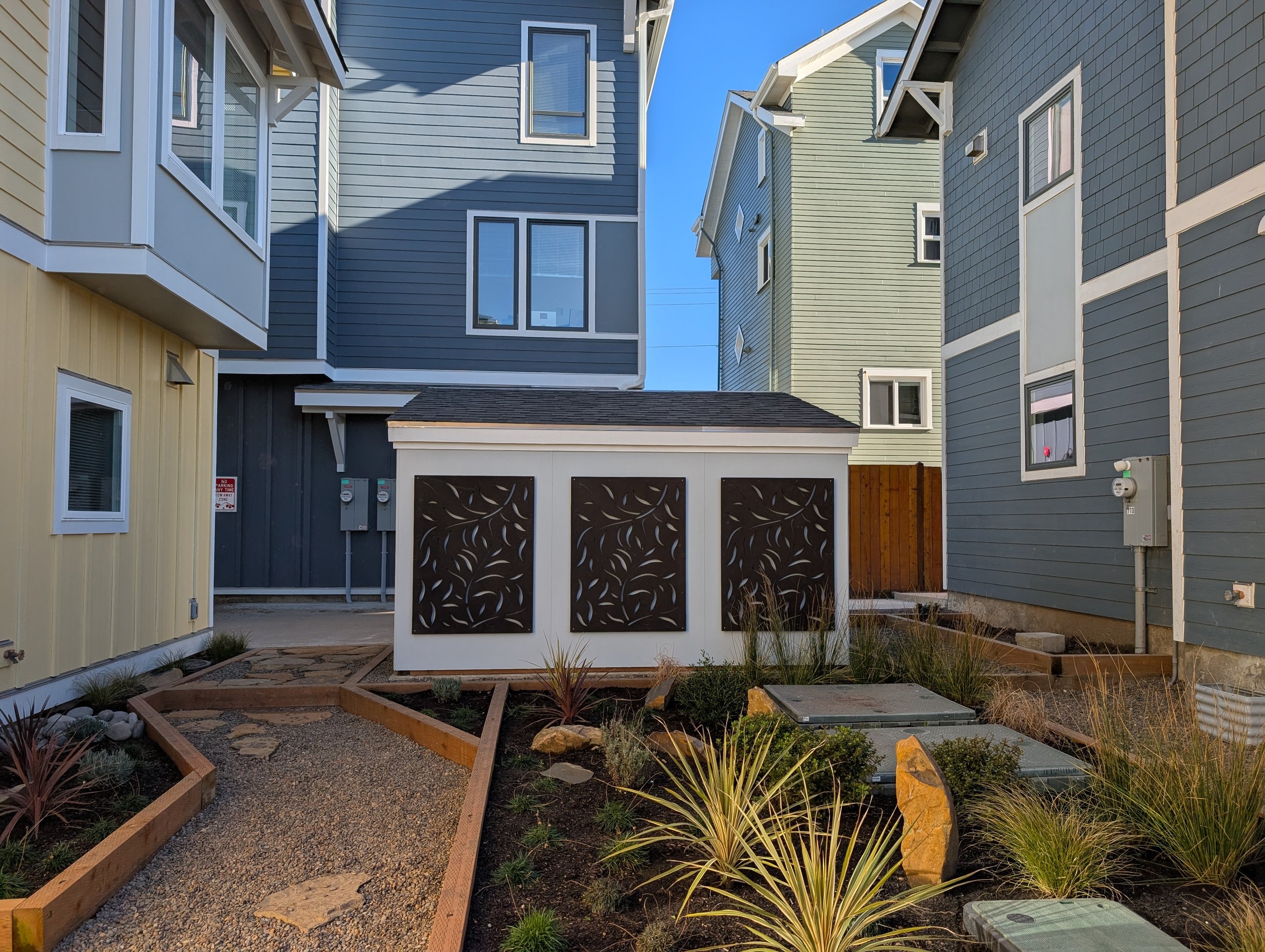
Finished development in Newport benefitting immediately from established plants
Built for the Coast
Landscaping on the Oregon coast comes with its own rulebook. Salt spray, wind, and shifting soil mean the plants that thrive in a Portland backyard will not always hold up a few miles from the open water. Native species like shore pine, salal, and evergreen huckleberry are built for these conditions. They handle salt exposure, need less water once established, and support the birds and pollinators already living in the area
There is also a practical side that goes beyond aesthetics. Grading, drainage, and erosion control are landscaping decisions as much as they are structural ones. A slope that is not planted or terraced correctly can shed soil and water in directions nobody planned for. Getting this right from the start helps protect the foundation and the yard around it, and addressing it during the build is often less costly than fixing it after the fact.
What's Growing in 2026
Landscaping trends this year lean toward working with the land rather than forcing it into a shape. Native plantings and meadow style gardens with wildflowers are replacing tightly clipped lawns. Grass alternatives like clover and moss are showing up in yards where a homeowner wants green space without the mowing schedule. Natural materials, wood, stone, and boulders, are standing in for poured concrete and manufactured pavers. At Conifer Construction, we are a big fan of the drama and beauty a well placed boulder can bring to a space.
Smart irrigation systems let homeowners water on a schedule that matches actual rainfall instead of a fixed timer, which matters in a region where rain shows up on its own calendar. None of this is about spending more. It is about spending in ways that match how people actually use their outdoor space and how the local climate behaves.
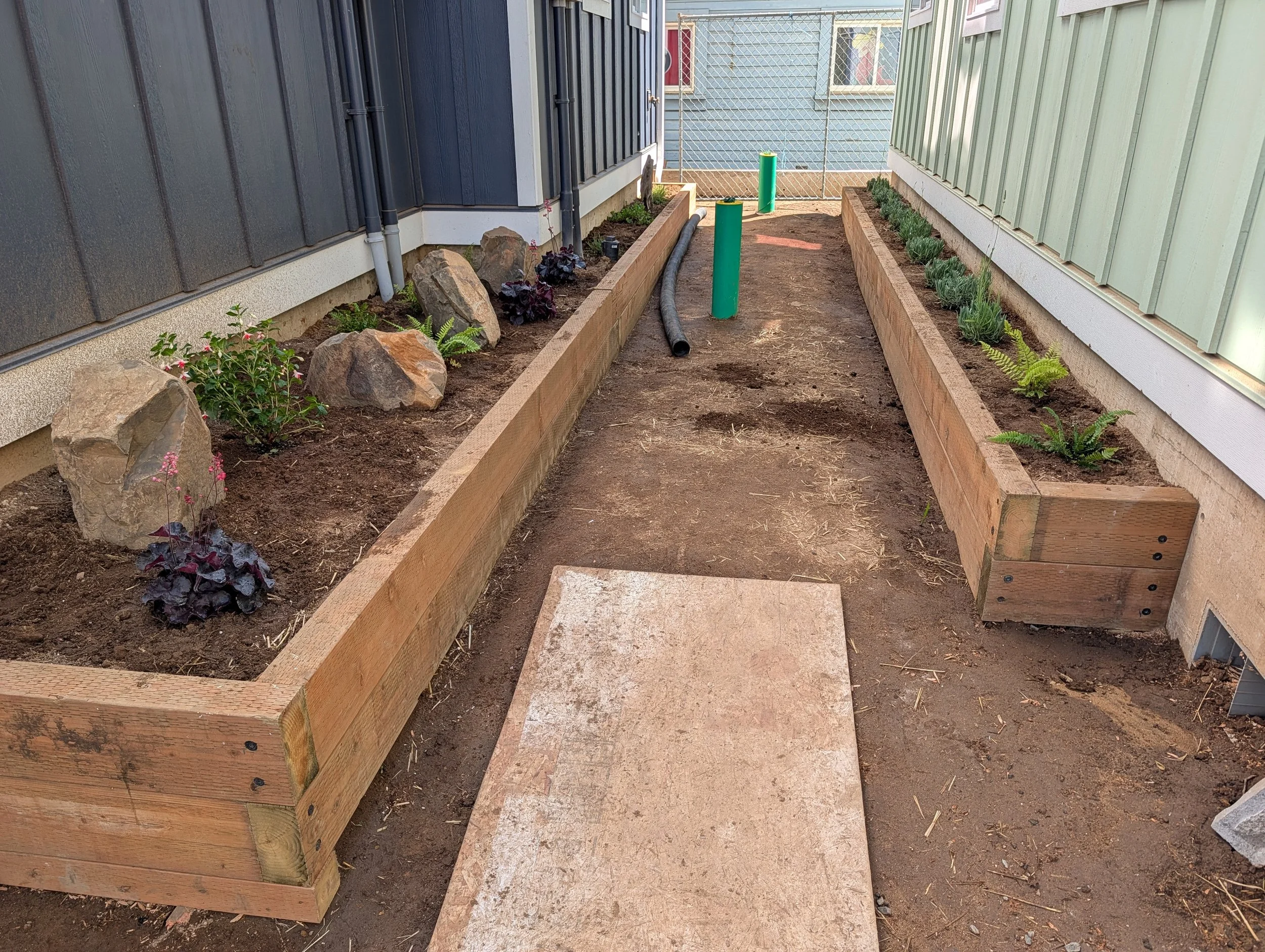
Prioritizing landscaping during construction is a challenge that is well worth the effort.
Landscaping and the Build Timeline
The biggest mistake we see is treating landscaping as a phase that starts after the house is finished. By that point, the driveway is poured, utilities are trenched, and grading decisions have already been made, sometimes in ways that limit what can be planted or built outside. Bringing landscaping into the design and permitting conversation early means retaining walls, drainage, and planting beds get planned alongside the house instead of squeezed in around it.
We saw this play out on our Nye Beach project, where a steep site grade could have been just an access problem. Instead, stone terracing and layered landscaping turned it into a staircase residents use every day, one that fits the surf cottage character of the neighborhood instead of fighting it. That kind of result comes from treating the yard as part of the design from day one, not an afterthought once the crew packs up.
The Takeaway
How many ways can we say is? Landscaping is not a line item to handle after move-in. It plays a role in protecting the site, it shapes how a home functions day to day, and it can factor into what a property is worth. Whether you are planning a new build or rethinking the yard around an existing home, the earlier landscaping enters the conversation, the more options you have.
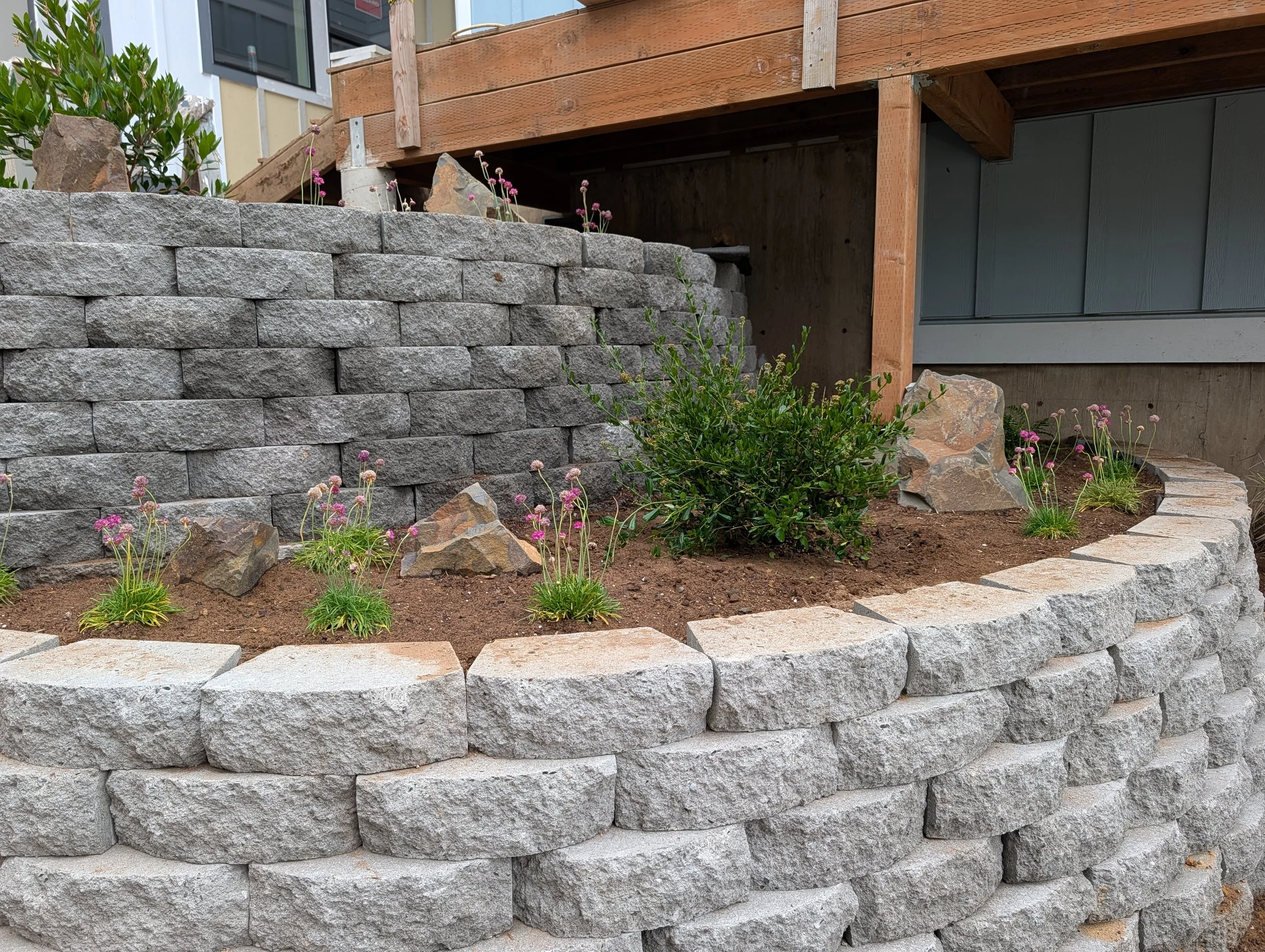
By the time the first tenants move in, these plants will have grown big, strong, and beautiful.
